
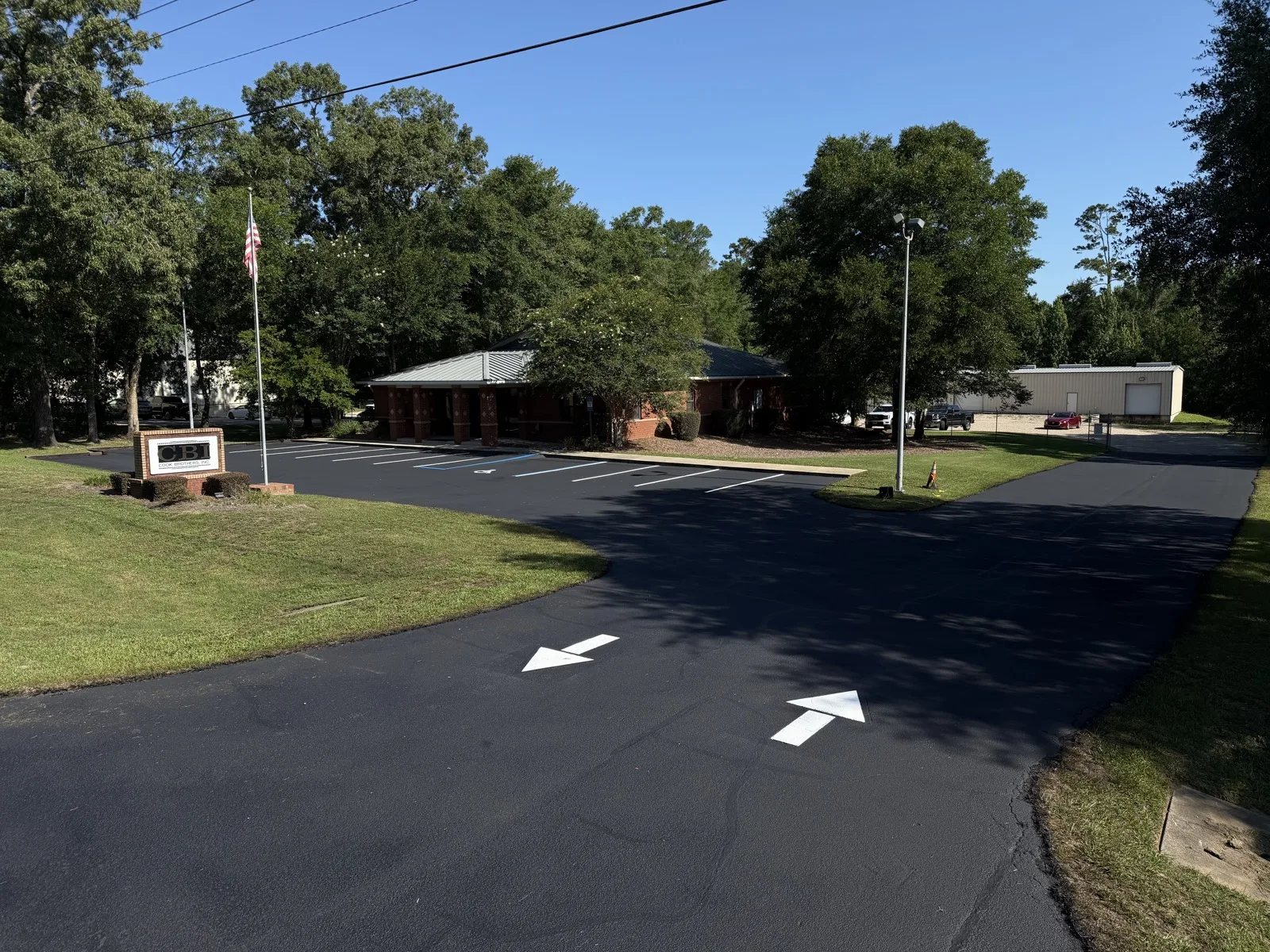
In the pavement industry, there is a significant difference between simply spraying sealer and structural asset management. Some property owners may view sealcoating as a cosmetic luxury, but as an experienced pavement specialist in Tallahassee since 1998, I view it as one of the most critical defensive measures you can take to protect the value of your investment.
If you want your asphalt to last 20 to 30 years instead of 15, the best strategy is to plan for sealing as soon as your new asphalt is ready for protection.
The Mechanics of the First Year: Why Timing is Everything
The best time to begin a preservation schedule is within 6 to 12 months after new asphalt is paved.
This timeline is not arbitrary—it is about chemistry. Asphalt is a flexible pavement held together by a binder of oils. When it is fresh, it contains “light oils” that need to migrate out of the micro-top layer. If you seal the surface too soon, you trap those light oils, which can cause the asphalt to remain too soft, leading to premature damage from traffic.
The Specialist's Rule of Thumb: Pour a small amount of water on your new pavement. If the water beads up like a waxed car, the oils are still too heavy on the surface—it is too early. If the water spreads out and “wets” the surface, the asphalt is ready to be protected.
Understanding the Enemy: UV Oxidation
The moment asphalt is laid, our North Florida sun begins to attack it. UV rays cause a process called oxidation, where the molecules in the binder break down and lose their ability to bond. This is why asphalt turns from deep black to dull gray.
Once that binder becomes brittle, the pavement loses its pliability. It stops “giving” under the weight of traffic and starts cracking. By sealing within that 6–12 month window, you are placing a top layer of protection over the deeper structural oils that keep your asphalt flexible.
If you missed that window, all is not lost—the sooner you seal the remaining oils, the better.
Prep Work: Why Surface Cleanliness Matters
Timing gets a lot of attention, but the condition of the surface on the day we seal is just as important. Sealer only bonds to what is under it. If a lot is caked with tire rubber, tracked-in clay, leaves, or algae buildup, those contaminants become the bond line—and a bond to dirt fails fast.
Before I mobilize, I walk the lot and identify anything that needs attention: oil stains that need a primer treatment, vegetation intruding at the edges, debris in the pavement joints, and any mildew or mold that has taken hold in shaded areas. For property managers whose sites need a deeper routine cleaning beyond my pre-seal scope—pressure washing sidewalks, building exteriors, or common areas—I am happy to refer partners like College Cleaning Crew who do that work well.
A few days of attention to prep is often the difference between a sealcoat that wears evenly for five years and one that lifts or fades in eighteen months.
The “New Guy” vs. The Specialist: Why Cheap is Expensive
I have seen many contractors come and go since I started in 1998. Recently, with new distributors opening nearby in places like Thomasville, it is easier than ever for someone to buy equipment and simply spray sealer on the asphalt.
But here is why the inexperienced will cost you more money:
- Over-Dilution: To give you a rock-bottom price, or simply from carelessness, they often over-dilute the material. You are paying for a wash that looks dark today but wears off in a single season because it lacks the “solids”—the polymers and minerals that actually provide protection. A sealcoat job that has to be redone too soon is paying twice.
- Lack of Knowledge: All asphalt is not the same, and all parking lots are not used in the same way. Gray asphalt requires a special “mix design” of sealer that reaches into the pores of the oxidized top layer, creating an adhesion instead of a thin film sitting on top that quickly wears off. Simply reading a manufacturer's instructions on mixing sealer will not teach that—that is learned by decades of sealcoating asphalt in the Florida sun. A knowledge of how traffic uses a parking lot is crucial, as well, which determines the application rate of that professional mix design of sealer.
- Lack of Assessment (or Integrity): A specialist knows that some asphalt is too far gone. I will never tell a customer that sealing a dead surface can add life to it. Honest transparency is as important as knowledge and experience.
The Specialist's Commitment
My jobs do not wear off prematurely because I do not use a “one-size-fits-all” approach. I use professional-grade, polymer-modified sealers tailored to the specific needs of our Tallahassee climate and the unique wear patterns of your property.
When you hire American Curb Appeal, you are not hiring a new guy trying to learn with a new spray wand. You are hiring nearly 30 years of local experience in structural integrity and pavement maintenance.
Is your pavement ready for a preservation assessment? Let us look at the mechanics of your asphalt today to ensure it is still standing twenty years from now.
Need parking lot maintenance?
Contact us today for a free proposal on your next pavement project.
Get Your Free Proposal